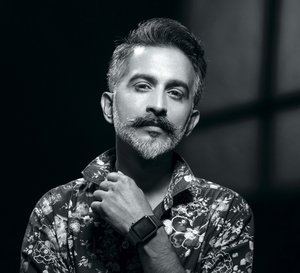
Hanging Out of a Helicopter for the Perfect Shot

There are moments when photography stops being about composition and becomes pure adrenaline.
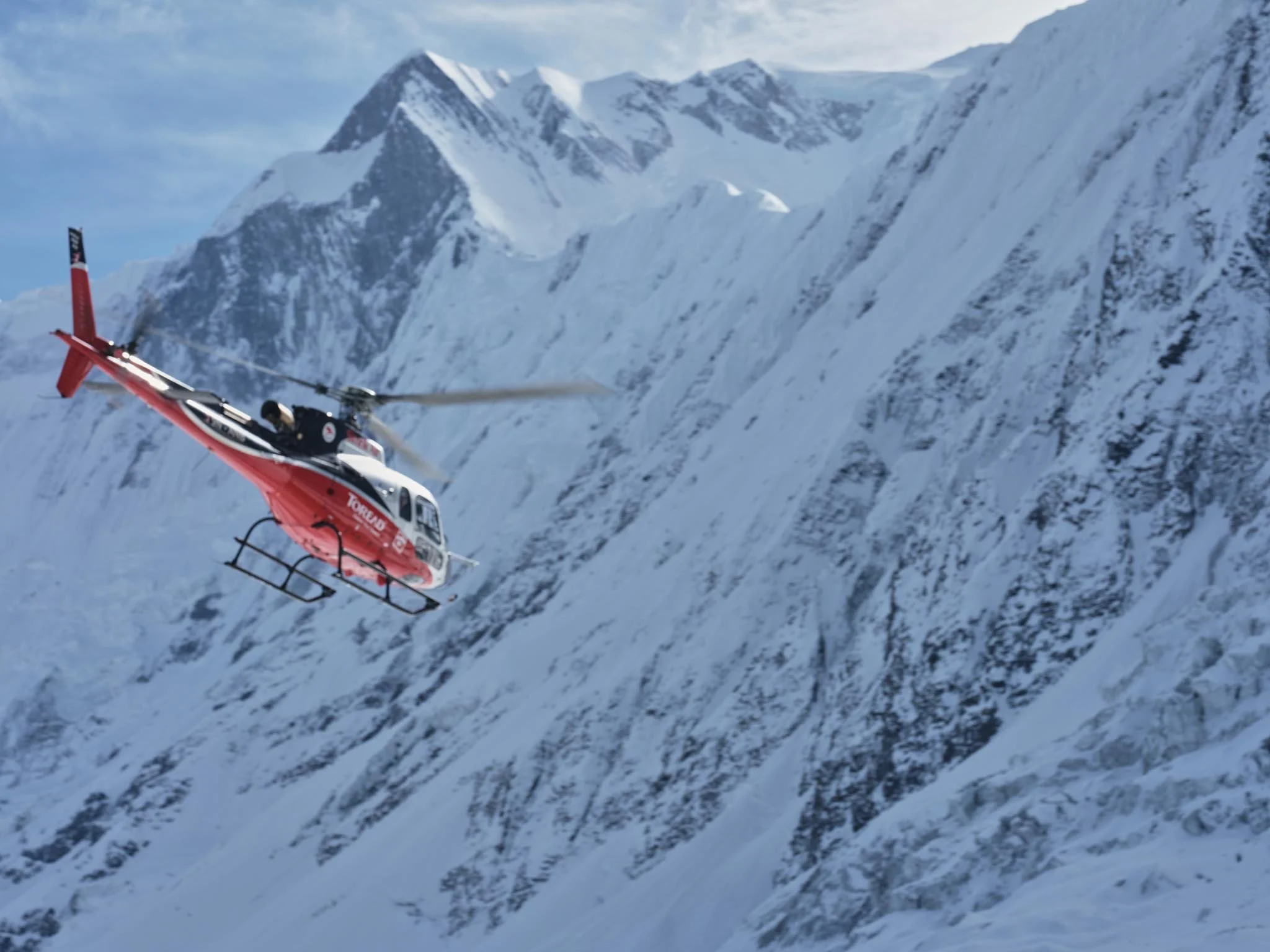
Flying above the Everest region in an open door helicopter, the wind tearing at my jacket and the smell of jet fuel mixing with thin mountain air, that is when you know you are alive.
One particular morning, the pilot told me we had a twelve minute window before clouds would swallow the peaks.
In those twelve minutes, I switched lenses twice, changed angles three times, and almost lost a glove to the glaciers below.
There is no pause button up there. No second take.
You either get the frame, or you don’t.
I have been doing this since 2005, working across both film and digital. From 35mm negatives and slides to the precision of medium format, the evolution has been constant.
These days, the Fujifilm GFX 100 is my trusted partner in the sky.
Shooting medium format at that altitude is not forgiving. Every vibration, every shift in wind, every micro movement matters. But when it works, the results carry a depth and clarity that justify the risk.
Seeing Ama Dablam, Everest, and Nuptse opening up in early light from that altitude is something very few ever experience.
Chartering helicopters for aerial photography in Nepal is not as simple as just flying.
It involves working closely with pilots and engineers to safely remove one or even both doors. A harness keeps me secured, carabiners clip me into the frame, and safety protocols are always in place. An oxygen tank stays on standby, though I have never had to use it.
Still, leaning out into open air, with nothing between you and a vertical drop, is not something you take lightly.
It demands focus.
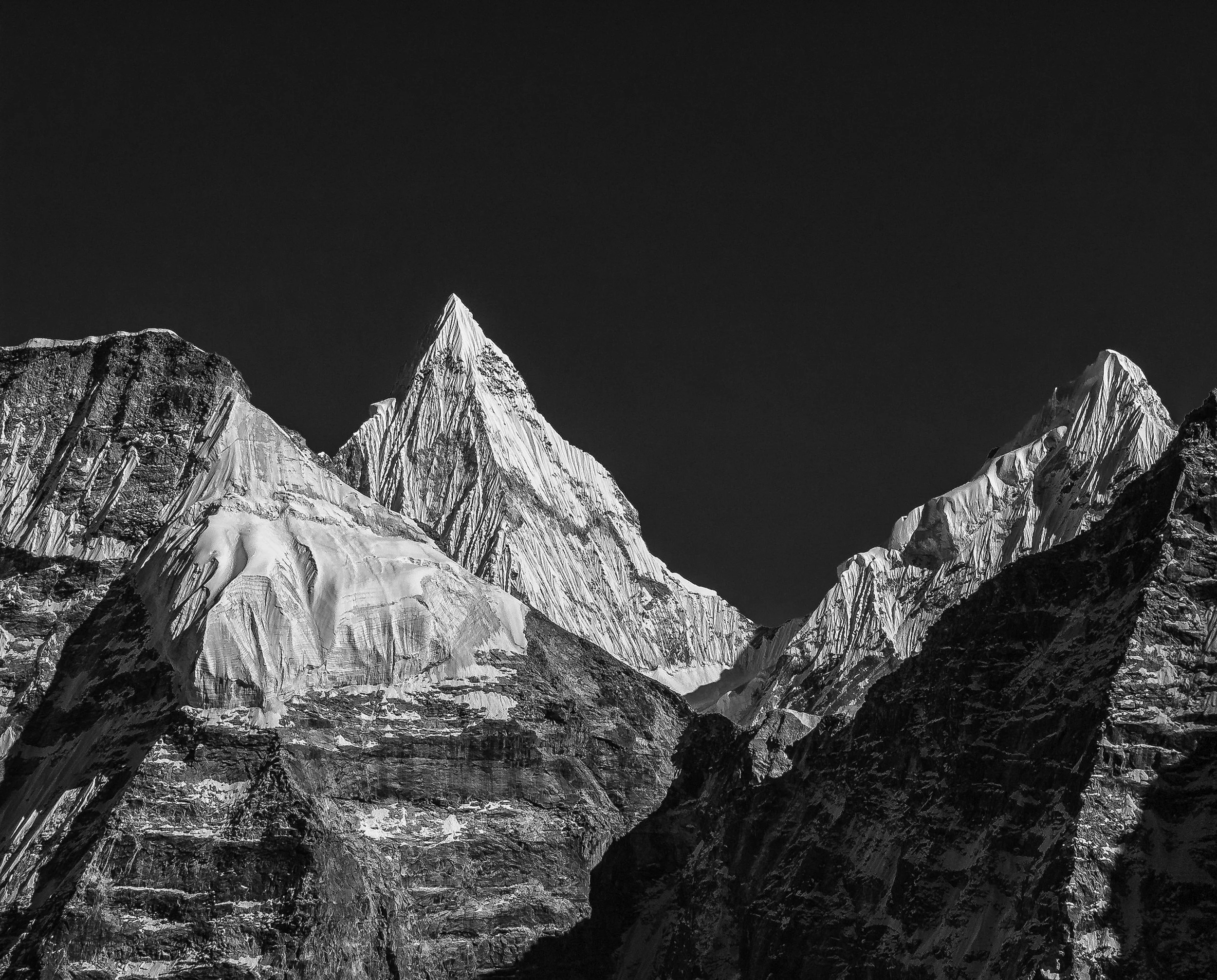
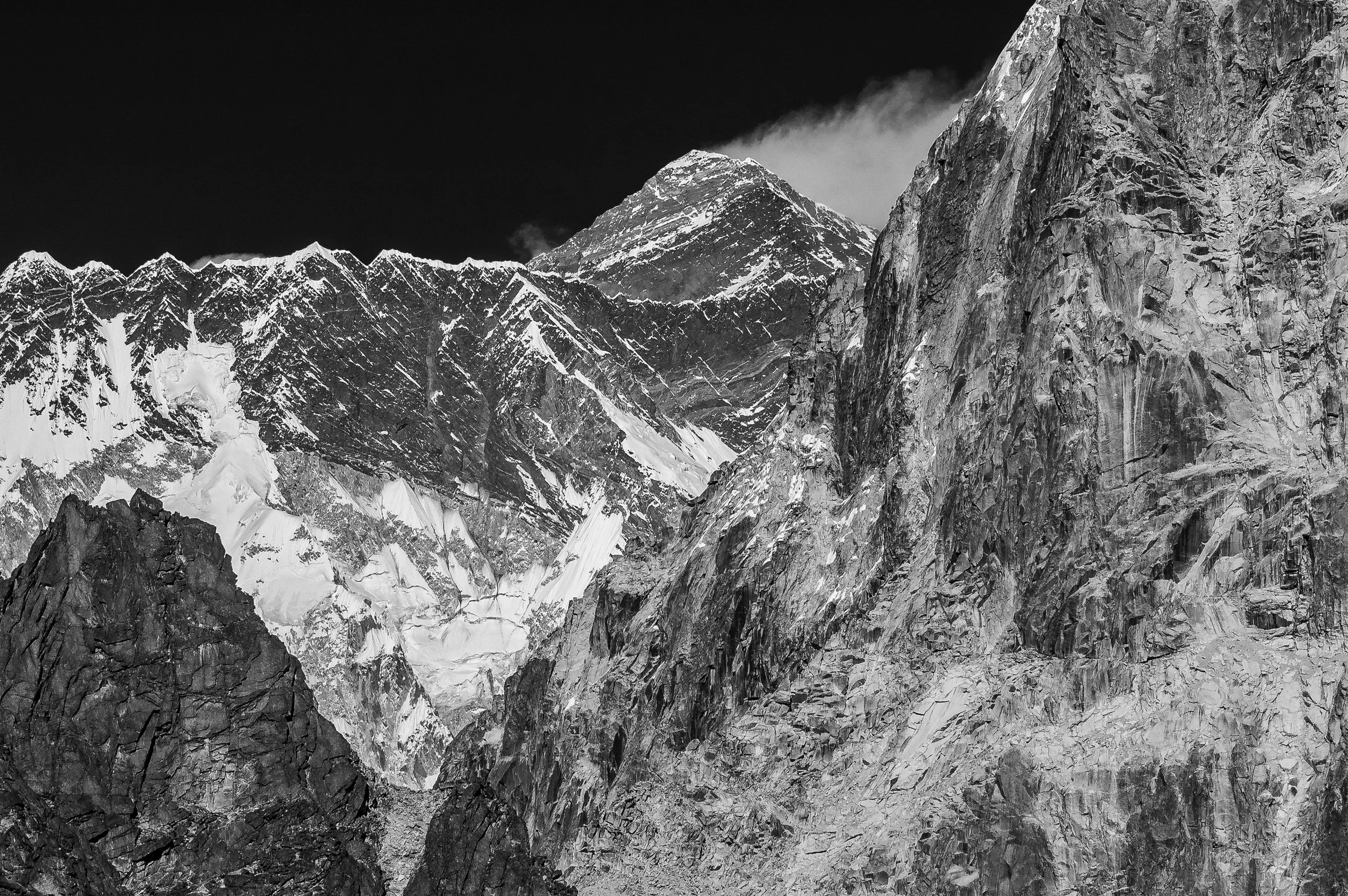


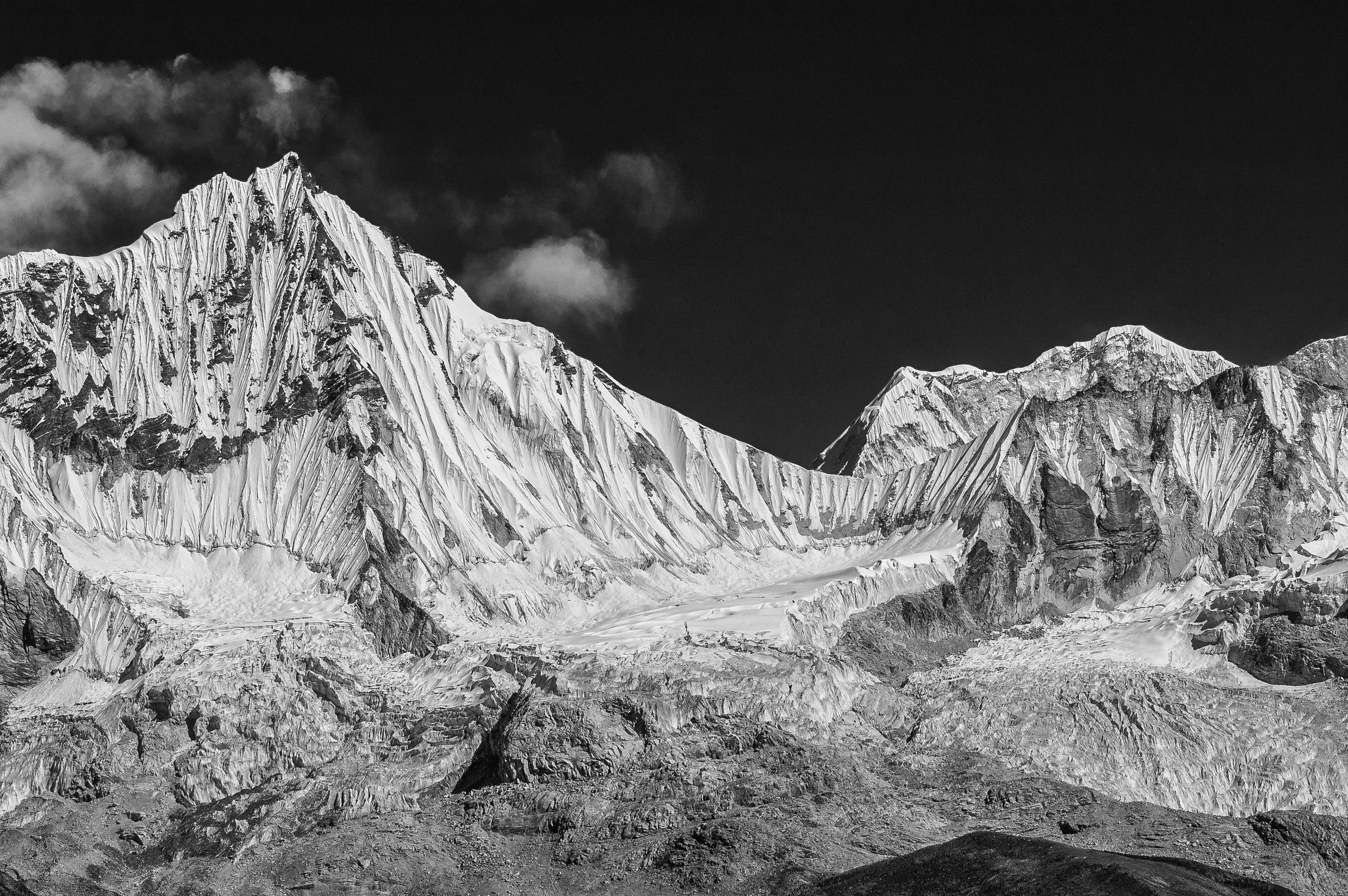


From aerial photography for luxury tourism campaigns to documenting glacier retreat for NGO climate projects, this perspective changes everything.
It is not just about scale. It is about context.
From above, you begin to see how landscapes connect, how glaciers move, how fragile the terrain actually is. It becomes documentation as much as it is photography.
This is where aerial photography in Nepal moves beyond visuals and into storytelling with purpose.
Aerial work is often described as dangerous.
It is.
But it is also one of the most precise forms of photography I have worked in. There is no room for hesitation. Communication with the pilot has to be exact. Timing has to be right. And decisions have to be made instantly.
Trust becomes part of the process.
Not just in the people you work with, but in your own ability to read the moment.
THE VIEW FROM ABOVE CHANGES EVERYTHING
What you see from the air is not available from the ground.
In regions like Everest, Ama Dablam, or the Khumbu valley, aerial access opens up perspectives that redefine how these landscapes are understood.
For photography, film production, tourism campaigns, and even climate documentation, this viewpoint carries a level of impact that cannot be replicated.
But it comes with responsibility.
The mountains do not offer second chances.
AERIAL PHOTOGRAPHY IN NEPAL: WHAT IT REALLY TAKES
A lot of people see the final image and assume it is just about being in the right place at the right time.
In reality, aerial photography in Nepal involves careful planning.
Flight permissions, weather windows, coordination with aviation teams, safety measures, and precise timing all play a role. Especially in high altitude regions like Everest, every minute in the air matters.
Whether it is for commercial photography, film production, tourism campaigns, or documentary work, the process behind the image is as critical as the image itself.
WORKING IN EXTREME CONDITIONS
From helicopter based shoots to remote ground production, working in the Himalayas demands adaptability.
Conditions shift quickly. Light changes without warning. And access is never guaranteed.
Whether shooting from the air or on location, the approach remains the same.
Stay aware. Stay ready. And know when to take the shot.
START YOUR PROJECT
If you are planning an aerial photography project, a high altitude shoot, or a film production in Nepal, it begins with understanding both the creative vision and the realities of execution.
From helicopter based aerial photography and drone work to full scale production support across Nepal, projects are approached with precision, safety, and clarity.
Get in touch to begin your project or send an email to mail@GautamDhimal.com